The BUILD Proposal in Illinois: What It Means for Local Control
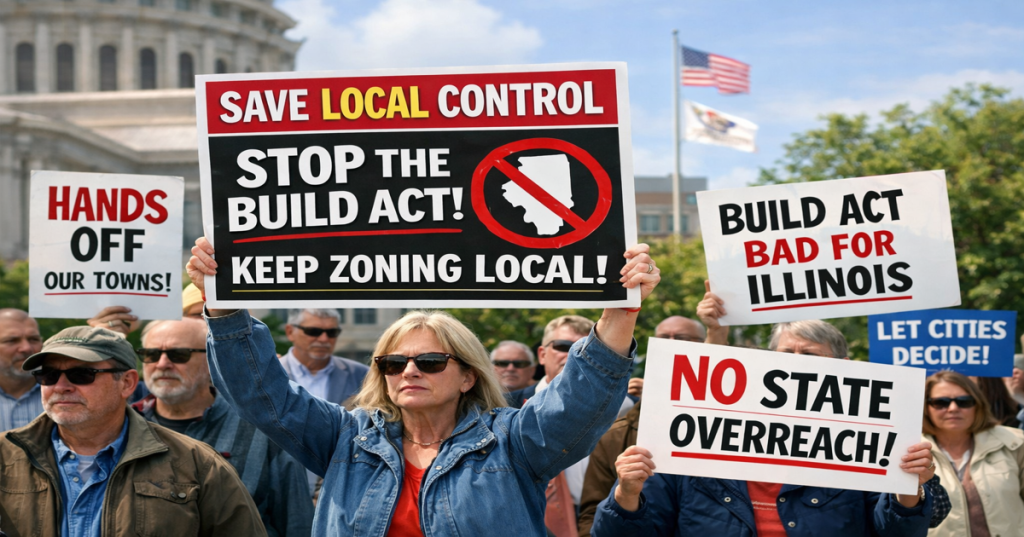
As Mayor, one of my core responsibilities is protecting the ability of our community to make decisions that reflect our local values, priorities, and needs. That’s why proposals like the BUILD initiative in Illinois deserve a closer look, because at their core, they raise an important question:
Who should decide what happens in our neighborhoods?
The BUILD proposal (often discussed in the context of statewide housing and development reform) is designed to streamline development approvals, particularly for housing, by reducing what some see as barriers created at the local level.
On the surface, that may sound reasonable. Illinois, like many states, is facing housing challenges. But the way BUILD attempts to solve that problem is where concern begins.
Under proposals like BUILD, authority that has traditionally been held by local governments, like zoning decisions, development approvals, and land use planning, could be significantly reduced or overridden by state level standards.
That means:
- Developments could proceed without local review.
- Community input could be limited or bypassed
- Locally adopted plans and ordinances could carry less weight
For communities like ours, that’s not a small change, it’s a fundamental shift in how decisions are made.
Local government isn’t just another layer of bureaucracy, it’s the level of government closest to the people.
We understand:
- The character of our neighborhoods
- The capacity of our infrastructure
- The needs of our residents
- The long term vision of our community
When decisions are made locally, they reflect real, lived experience, not one size fits all policies.
If BUILD or similar legislation moves forward in its current form, communities could see:
- Increased density without corresponding infrastructure
Roads, schools, and emergency services may not keep pace with rapid development - Loss of community character
Developments that don’t align with existing neighborhoods could be approved with limited input - Reduced transparency
Residents may have fewer opportunities to engage in decisions that directly affect them - Strain on local resources
Without local oversight, planning for growth becomes reactive instead of strategic
To be clear, this isn’t about being anti development. Growth is important. Housing is important. But how we grow matters just as much as how much we grow.
There is a path forward that:
- Encourages responsible development
- Addresses housing needs
- And preserves local decision making
State and local governments should be partners, not adversaries, in solving these challenges.
As this conversation continues in Springfield, it is important that your voice is heard.
If you share concerns about the potential loss of local control, I encourage you to contact your State Representative and State Senator and respectfully voice your opposition to this proposal. Elected officials need to hear directly from the residents they represent.
Civic engagement is one of the most powerful tools we have, and your input can help shape the outcome of this legislation.
I will continue advocating for a balanced approach, one that respects the role of local governments while working toward broader statewide goals.
Because at the end of the day, the people who live in our communities should have a voice in shaping them.
That’s not just good policy, it’s good government.
 Forward Motion