Keeping Round Lake in the know—because informed neighbors shape stronger communities

Posts

  • Trying NOT to be a Mayor that Micro-Manages!

    Last week, we completed an update to the median at the entrance of the Bright Meadows subdivision. The entire cost of the project, including labor and materials, was funded through the Bright Meadows SSA agreement with the Village.

    For several years, I watched the landscaping in the median become increasingly overgrown. The trees had matured to the point where they would eventually damage the roadway or decline altogether. The median was also crowned too high, causing mulch to wash into the curb and gutter after installation. Simply put, it was not designed in a way that would age well or be easily maintained.

    I asked our Public Works Department to start fresh: remove the existing landscaping, regrade the area, and develop a new plan with four goals in mind:

    1. Low maintenance
    2. Aesthetically pleasing
    3. Budget friendly to the SSA fund
    4. Incremental improvements that can be evaluated, planned, and budgeted for annually

    After exploring several contractor options and determining the project scope was relatively manageable, it was decided that the work could be completed in-house rather than hiring an outside landscaping company.

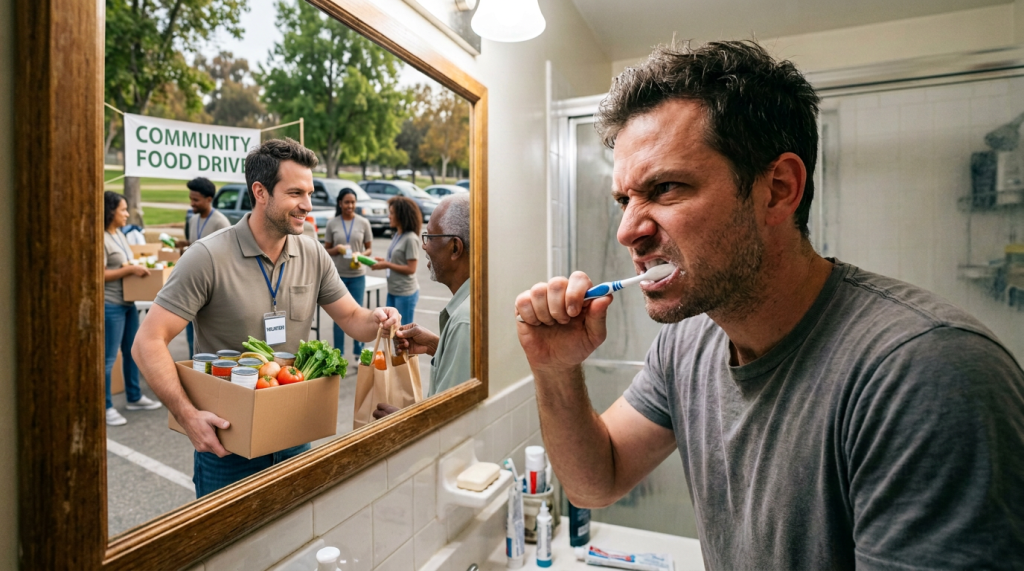
    As the project progressed, I made sure to stop by periodically and do my part by micro-managing the operation and making it as inefficient and expensive as possible. I even provided an exceptionally detailed rendering of what I expected the finished product to look like, forcing the crew to reconsider all of their work and start over. Below is my expert rendering of my expectations of the end product.

    In the end, it’s not exactly what I envisioned, but they managed to get close enough. (actually knocked it out of the park)

    In all seriousness, I try to stay out of the day-to-day operations of the Village. We are fortunate to have an outstanding administration and dedicated employees who keep our community running smoothly every day. Their expertise, professionalism, and commitment allow critical services to be delivered efficiently and without interruption.

    A sincere thank you to our Public Works Department for their hard work designing and installing the new landscaping and entertaining a silly picture for this blog.

    The new median is a significant improvement to the Bright Meadows entrance and another example of the pride our employees take in maintaining and enhancing our community.

  • Building Stronger Communities Through Redemption

    Building Stronger Communities Through Redemption

    One of the greatest measures of a community is not how it treats people at their best, but how it helps people recover from their mistakes, overcome obstacles, and build a better future.

    That is why I would like to highlight the important work being done by Coalition Legal, a nonprofit organization based in Waukegan that helps Lake County residents remove barriers created by past criminal records. Through free legal assistance with expungements, record sealing, driver’s license reinstatement, professional licensing issues, and other services, Coalition Legal helps individuals gain access to employment, housing, and opportunities that might otherwise remain out of reach.

    For many people, a mistake made years ago can continue to impact nearly every aspect of life. Employment opportunities, housing applications, and professional advancement can all be affected long after someone has turned their life around. Coalition Legal’s mission is simple but powerful: help people move forward and become productive, successful members of their communities.

    When I think about the impact of second chances, I immediately think of my good friend, Ricky Bueno. I have known Ricky for more than 20 years and have had the privilege of witnessing his remarkable journey firsthand. Coalition Legal has been part of his success story, but the credit also belongs to Ricky’s unwavering commitment to self-improvement, accountability, and positive change.

    What inspires me most about Ricky is not simply where he is today, but the determination it took to get there. He has proven that our past does not have to define our future. Through hard work, perseverance, and a commitment to personal growth, he has become a leader, mentor, and positive influence for countless others.

    Personally, Ricky inspires me to be a better man, father, husband, and son. He is the kind of person who not only holds himself accountable but encourages those around him to be their best as well. His story is a powerful reminder that when individuals are given the opportunity to move beyond their past, they can accomplish extraordinary things.

    The impact of organizations like Coalition Legal extends far beyond the individuals they serve. When people gain access to meaningful employment and stable housing, families become stronger, employers gain dedicated workers, neighborhoods thrive, and communities prosper. Second chances are not simply acts of compassion; they are investments in stronger communities and a brighter future for all of us.

    I encourage residents, businesses, and community organizations to learn more about Coalition Legal and the resources they provide. Their work demonstrates what is possible when accountability is paired with opportunity and when we believe that people are capable of growth, redemption, and success.

    Together, we can continue building communities where people are judged not solely by their past mistakes, but by their willingness to learn from them, move forward, and contribute to something greater than themselves.

    Learn More About Coalition Legal

    Website

    Facebook Page

    Community Facebook Group

    Ricky’s FB post

  • America’s 250th: Remembering Our Heroes on Memorial Day

    America’s 250th: Remembering Our Heroes on Memorial Day

    As Memorial Day approaches, our community joins millions of Americans in pausing to remember the brave men and women who made the ultimate sacrifice in service to our nation. It is a day of reflection, gratitude, and respect for those who gave their lives defending the freedoms we often take for granted.

    This year’s Memorial Day carries additional meaning as our nation begins commemorating America 250, the 250th anniversary of the founding of the United States. For nearly two and a half centuries, generations of Americans have stepped forward in times of war and uncertainty to preserve the ideals of liberty, democracy, and opportunity that define our country. Memorial Day reminds us that the story of America has always been written through sacrifice and service.

    As the son of a Vietnam veteran, this day has always held deep personal meaning for me. I grew up with an appreciation for the sacrifices made not only by those who never came home, but also by the families who carried the burdens of service long after the battles ended. Veterans and military families understand the true cost of freedom in a way that words alone can never fully express.

    This Sunday morning, I had the opportunity to host a breakfast conversation with several HOA representatives from across the Village. I intentionally chose to hold the gathering at the American Legion Post 1170 hall in Round Lake Park to support their monthly breakfast initiative, which helps fund many of the programs and services they provide to local veterans. It was a meaningful way to bring residents together while also supporting an organization that continues to give back to those who served our country.

    Memorial Day is not simply the unofficial start of summer. It is a solemn reminder that the freedoms we enjoy today were secured by ordinary Americans who answered an extraordinary call to serve something greater than themselves. Their courage and sacrifice must never be forgotten.

    I encourage everyone in our community to take a moment this Memorial Day weekend to attend a ceremony, visit a memorial, display our nation’s flag, or simply pause in quiet reflection for those who gave their lives for our country. As we look ahead to celebrating America’s 250th birthday, may we also renew our commitment to unity, service, and appreciation for those who defended the American dream across generations.

    If you’re looking for a meaningful way to reflect with your family, I encourage you to read America’s White Table by Margot Theis Raven (click the link to listen to it on youtube)

    It’s a powerful and moving story that beautifully explains the symbolism of the white table—a tribute to our POWs and MIAs—and helps instill respect and understanding in younger generations.

    May we never take the freedoms we enjoy for granted, and may we continue striving for a world where peace prevails over conflict. We offer our prayers that one day future generations will no longer know the tragedy of war, and that the sacrifices of our fallen heroes will help guide us toward greater unity, understanding, and lasting peace.

  • Small Things Matter

    Small Things Matter

    “Great things are not done by impulse, but by a series of small things brought together.” — Vincent Van Gogh

    Our downtown continues to reflect the pride and care of our community, and recent improvements are making a noticeable difference in its overall appearance and welcoming feel.

    This spring, the Village invested in pressure washing and cleaning downtown sidewalks, helping refresh the look and feel of our public spaces after the winter season. In addition, all downtown planter boxes have been replaced with new, uniform planters, creating a more consistent and attractive streetscape.

    A big part of this effort has been our partnership with the Round Lake Area Garden Club. Their volunteers have helped refresh planting areas, add seasonal color, and bring a thoughtful, coordinated approach to downtown beautification.

    These are simple but meaningful improvements. Clean sidewalks, consistent planters, and well-maintained landscaping help support local businesses, encourage foot traffic, and strengthen community pride.

  • Should We Abate Mosquitoes? Let me know at bbrubaker@roundlakeil.gov

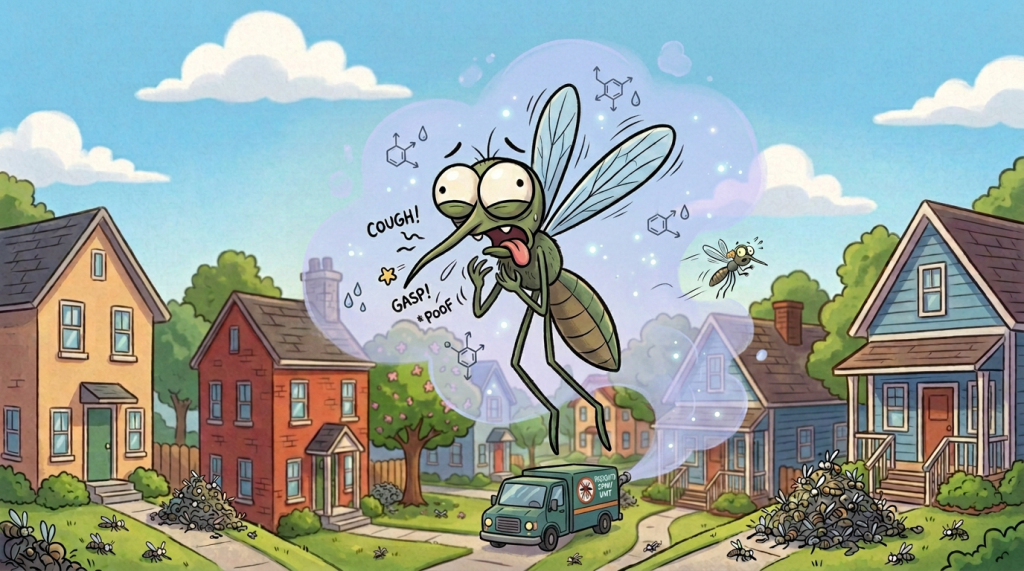
    Should We Abate Mosquitoes? Let me know at bbrubaker@roundlakeil.gov

    Every summer in Northern Illinois, we get the same question from residents:

    Do we actually need mosquito abatement—or should we just let nature take its course?

    It’s a fair question, and like most things in local government, the answer isn’t black and white. It’s about balance. It’s about public health. And it’s about recognizing the environment we live in, especially here in Lake County where natural spaces and residential neighborhoods exist side by side.


    Most of us think of mosquitoes as a backyard nuisance. But from a public health standpoint, they’re something we have to take seriously.

    In Illinois, mosquito surveillance is focused primarily on West Nile Virus. Each year, local health departments set traps, monitor populations, and test samples across communities throughout Northern Illinois. When mosquito activity increases or virus detection appears, action thresholds are triggered.

    That’s the key point—this is not guesswork. It’s a monitored, data-driven public health system.


    There is sometimes a misconception that mosquito abatement means “spraying everything everywhere.”

    That is not how modern programs operate.

    In practice, abatement in Northern Illinois is focused on:

    • Monitoring mosquito populations through traps and testing
    • Treating standing water where mosquitoes breed (larval control)
    • Targeted spraying only when thresholds are met
    • Responding to public health risk—not routine blanket spraying

    Larval control is the most effective tool we have. Treating mosquitoes before they become adults is significantly more efficient than trying to manage them once they are flying.

    But even with strong programs, results are never absolute. Mosquito control reduces populations—it does not eliminate them.


    In our region, mosquito populations can change quickly depending on rainfall, temperature, and standing water conditions.

    Field data across the Chicago metro area and surrounding counties consistently shows a simple truth:

    • Untreated standing water and unmanaged storm systems can produce very high mosquito emergence rates
    • Well-maintained larval control programs can significantly reduce those numbers, often cutting emergence by more than half in treated areas under good conditions

    But here’s the reality check that matters most for residents:

    Even the best municipal programs operate within a larger ecosystem that includes wetlands, creeks, and forested areas.


    One of the most important factors in this conversation is geography.

    We are fortunate to live near and within a system of protected natural areas like the Lake County Forest Preserves. These lands are an incredible asset—environmentally, recreationally, and ecologically.

    But they also play a role in mosquito ecology.

    These areas:

    • Contain wetlands, ponds, and natural water systems
    • Are not broadly treated with pesticides or larvicides across their entire footprint
    • Serve as natural breeding and habitat zones for a wide range of species

    That means they also contribute to baseline mosquito activity in surrounding communities.

    This is not a criticism of the preserves—it is simply reality. These lands are managed for ecological health, biodiversity, and conservation first. Mosquito suppression is not their primary function.

    So when residents ask, “Why do we still have mosquitoes even with abatement?” part of the answer is that we live next to a large, healthy natural system that cannot and should not be fully controlled.


    It’s also important to acknowledge that mosquitoes are part of the ecosystem.

    They are food for fish, birds, bats, and other insects. Any discussion about abatement has to recognize that we are working within a living system—not just targeting a single pest.

    That’s why modern mosquito programs emphasize:

    • Targeted treatment instead of broad spraying
    • Surveillance and thresholds instead of constant application
    • Minimizing impact on non-target species

    The goal is balance, not eradication.


    From a municipal standpoint, the most responsible approach is a balanced one:

    • Strong monitoring and surveillance
    • Targeted larval control where it is most effective
    • Limited, data-driven adult mosquito spraying when necessary
    • Continued public education and resident participation
    • And an understanding that natural areas will always contribute some level of mosquito activity

    This is not about choosing between “abatement or no abatement.” It’s about doing the right amount, in the right places, at the right time.


    Mosquito control is one of those issues where expectations matter just as much as operations.

    We can reduce risk. We can improve comfort. We can protect public health.

    But we cannot—and should not try to—remove mosquitoes from a region defined by wetlands, rivers, forest preserves, and seasonal rainfall.

    The goal is not perfection. The goal is balance.

    And like many things in local government, the best outcomes come when public agencies, regional partners, and residents all do their part.

    As always, this is exactly the kind of topic where community input matters. These are the conversations that help shape how we manage services in a way that reflects both our natural environment and the expectations of the people who call this community home.

    Should We Abate Mosquitoes? We spend about $30,000 per year for something that it almost impossible to justify with data.

    Let me know at bbrubaker@roundlakeil.gov

  • Sprucing Up Downtown Round Lake: A Fresh Look for Our Community

    Sprucing Up Downtown Round Lake: A Fresh Look for Our Community

    Downtown Round Lake is getting a noticeable refresh this season, and the results are already beginning to show. From cleaner sidewalks to vibrant new greenery and patriotic touches overhead, this coordinated effort is all about creating a more welcoming, walkable, and visually appealing downtown for residents and visitors alike.

    One of the first visible improvements has been the pressure washing of downtown sidewalks. Years of wear, seasonal weather, and everyday foot traffic naturally leave their mark, but a deep clean makes a dramatic difference. The brighter, cleaner walkways immediately improve the feel of the downtown core and set the stage for further enhancements.

    Alongside the cleanup, the Village has installed new America 250 banners and bunting on downtown light poles, adding a patriotic and celebratory touch to the streetscape. These banners help highlight an important national milestone while also adding color, movement, and identity throughout the corridor.

    Uniform planter boxes are also being installed throughout key downtown areas. These planters are more than just decorative. They help create a consistent visual identity for the district while also softening hardscapes with natural color and texture. When designed thoughtfully, small details like these can transform how people experience a space, encouraging them to slow down, linger, and enjoy the surroundings.

    A major part of this effort has been the partnership with the Round Lake Garden Club, whose members bring both expertise and passion for local beautification. Their involvement ensures that the plant selections are not only attractive but also well suited for our local climate and seasonal conditions. Community partnerships like this are what turn simple improvements into lasting civic pride.

    This weekend marks an exciting milestone. Flowers and plants will be installed in the new planter boxes throughout downtown. Once in place, they will bring color, life, and seasonal character to the streetscape, an immediate reminder of what can happen when community, planning, and volunteer effort come together.

    These improvements are part of a broader commitment to strengthening the identity of downtown Round Lake. A clean, well maintained, and thoughtfully landscaped downtown does more than look good. It supports local businesses, encourages foot traffic, and builds a stronger sense of place for everyone who calls Round Lake home.

    As the planting continues and the flowers take root, residents are encouraged to take a walk downtown and see the transformation firsthand. It is a small change with a big impact and just the beginning of continued investment in the heart of our community.

  • Building Community through Collaboration in Round Lake

    Building Community through Collaboration in Round Lake

    One of the challenges many municipalities face especially communities like Round Lake is that local government boundaries rarely align neatly with the districts and agencies that serve residents. This can sometimes make communication, coordination, planning, and even understanding where tax dollars go more complicated than people realize.

    The Village of Round Lake is uniquely served by a total of eight school districts, four library districts, three fire protection districts, one park district, and representation across three separate Lake County Board districts. Each organization has its own elected board, budget, priorities, taxing authority, and service boundaries that may overlap differently throughout the community.

    This structure can sometimes create confusion for residents when discussing taxes, services, infrastructure, or accountability because many decisions affecting daily life are made by separate governing bodies that operate independently from the Village government. At the same time, it also highlights how interconnected our region truly is and why strong working relationships between all levels of local government are so important.

    No single entity can address every challenge alone. Whether discussing public safety, transportation, economic development, parks, schools, stormwater management, library services, or long term planning, collaboration between municipalities, districts, counties, community organizations, and our business community is essential to moving communities forward.

    Economic development especially requires strong partnerships and regional cooperation. Businesses considering investing in Round Lake often look beyond just one municipality. They evaluate schools, transportation access, workforce availability, public safety, nearby amenities, infrastructure, and the overall strength of the surrounding region. That means maintaining positive working relationships with neighboring communities, taxing bodies, and regional partners directly impacts our ability to attract new investment and support existing local businesses.

    Our local businesses are a critical part of the community fabric. They create jobs, sponsor youth programs and events, support local organizations, generate tax revenue, and provide services that residents rely on every day. Supporting economic growth is not simply about attracting new businesses, but also about helping existing businesses succeed, improving corridors and public spaces, encouraging redevelopment, and creating an environment where investment feels welcomed and sustainable.

    One of my goals as Mayor is to continue strengthening relationships and improving communication between the Village, our neighboring communities, taxing bodies, business owners, HOA boards, and most importantly, our residents. Transparency and coordination matter. Residents deserve to better understand not only how local government functions, but also how many different agencies and stakeholders work together to provide the services, opportunities, and quality of life people expect and deserve.

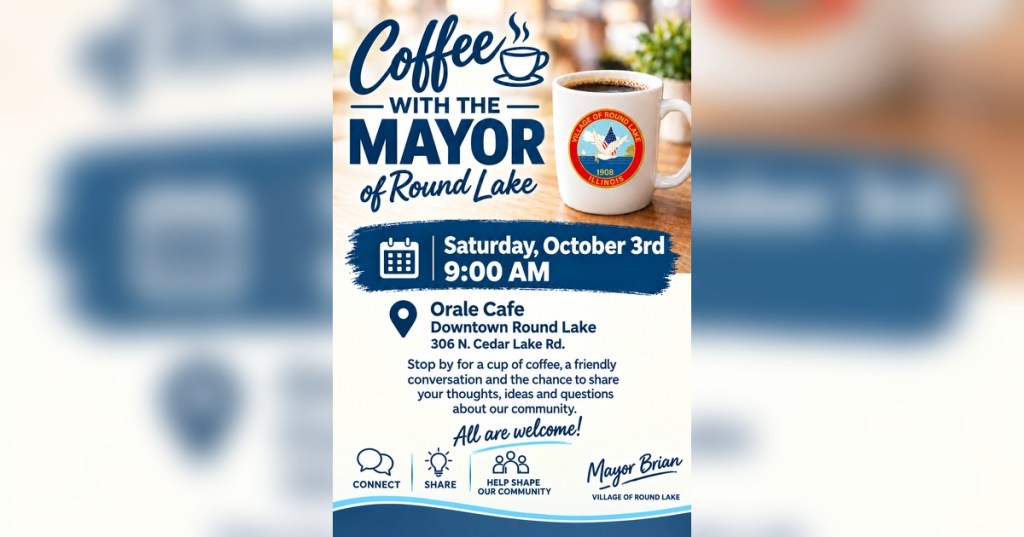
    In the coming weeks, I will also be launching a new initiative called “Coffee with the Mayor.” This effort will be multi pronged and designed to better connect with both HOA boards and individual residents throughout the community. These conversations will create opportunities to share information, discuss initiatives and projects, answer questions, and most importantly, listen directly to residents about the issues and ideas that matter to them. Stay tuned for additional details and scheduling information.

    While the structure of local government can sometimes feel complicated, it also demonstrates the level of investment and partnership that exists throughout our community. The success of Round Lake depends on collaboration, professionalism, communication, and maintaining productive relationships across all of the organizations and individuals helping shape our future.

    Local government works best when communication stays open, collaboration remains strong, and everyone keeps the long term success of the community at the center of the conversation.

  • Celebrating Young Artists at Round Lake High School

    Celebrating Young Artists at Round Lake High School

    I had the chance to attend the Art Grad Finale—the Senior Art Faire—at Round Lake High School, and it was a great reminder of the talent we have in this community.

    The photos don’t do these pieces justice. Seeing the work in person, you can really appreciate the detail, creativity, and thought behind each piece. Some of the artwork was truly impressive.

    What stood out most, though, was meeting the students behind the work. I spoke with a dozen or more artists, each with their own perspective and story. Two conversations in particular stuck with me.

    Ms. Josephine and Ms. Evelyn spoke with real passion about their pieces—what inspired them and where they hope to go next. Their excitement about the future was clear, and it was genuinely inspiring to hear.

    When I was sworn in as mayor exactly 365 days ago, one of the first things I set out to do was work with local school districts and the art programs to bring student work into Village Hall, specifically to have pieces matted and framed on the empty walls in my office. I’m looking forward to seeing that come to life in the coming weeks.

    If you know a company or individual who does framing, I’d appreciate the connection. Please feel free to email me at bbrubaker@roundlakeil.gov.

    Enjoy the photos—but if you really want the full effect, make a point to attend one of these art showings in the future. You won’t be disappointed.

  • Round Lake’s Vision: Growth Through Community Voices

    Round Lake’s Vision: Growth Through Community Voices

    Last night’s Comprehensive Plan workshop was exactly what local government should look like, residents showing up, asking questions, sharing ideas, and helping shape the future of their community.

    A comprehensive plan isn’t just a document that sits on a shelf. It’s a roadmap for the next decade, guiding decisions on development, infrastructure, housing, parks, and how we grow as a village. And that roadmap is only as strong as the voices behind it.

    That’s why last night mattered.

    We had thoughtful conversations about where we are today and where we want to go. Some ideas challenged each other. Some aligned right away. That’s part of the process. Growth, especially smart, measurable growth, requires input, discussion, and sometimes a little disagreement to get it right.

    One thing was clear. Round Lake is showing up.

    Residents aren’t sitting on the sidelines. They’re participating. They’re engaging. And they’re making it known that they care deeply about the future of this community. That kind of involvement is what turns plans into progress.

    There’s also a reality we have to acknowledge. We need growth and development to remain a strong, sustainable community. But it has to be the right kind of growth. Growth that reflects our values. Growth that protects what people love about Round Lake while positioning us for the future.

    That balance only happens when people stay involved.

    If you couldn’t attend tonight, there are still plenty of ways to make your voice heard. You can visit the project website here
    👉 https://round-lake-il-comprehensive-plan-hlplanning.hub.arcgis.com/

    On the site, you will find an online survey where you can share your thoughts on priorities and future goals. There is also an interactive map that lets you pinpoint ideas, concerns, and opportunities across the community. You can review project updates and timelines so you can see where we are in the process and what comes next.

    Community feedback, both in person and online, is a critical part of this process. The Village is actively collecting input to help guide decisions over the next decade and beyond, from housing and development to parks, transportation, and overall quality of life.

    There will also be additional in person meetings and workshops as the plan progresses. Dates and details will continue to be posted on the project website, so I encourage everyone to check back regularly and stay involved.

    The old saying it takes a village could not be more true here. A comprehensive plan is not written for the community, it is written by the community.

    And last night was a great example of that in action.

  • Building Lake County’s Future Through Collaboration

    Building Lake County’s Future Through Collaboration

    Attending the “Big Event” hosted by Lake County Partners was an energizing reminder of how much momentum is building across Lake County when it comes to collaboration, economic development, and community investment.

    The room was filled with a strong mix of business leaders, public officials, developers, and community stakeholders all focused on one shared goal: strengthening the region’s future.

    The highlight of the program was the keynote address by author Jon Roberts. His message blended storytelling with practical insight about leadership, resilience, and the importance of staying grounded in purpose while navigating change. He connected big picture ideas to real world decision making in a way that felt relevant to everyone in the room.

    One takeaway that stood out in particular was his point about development and balance. He emphasized that the conversation is not only about what gets developed, but also about what does not get developed. That distinction matters. Environmental preservation and responsible growth both have to coexist, and neither should be ignored. At the same time, he challenged the idea that “no development” is automatically the best outcome. In some cases, land or opportunity that is left untouched does not always serve the broader needs or long term purpose of a community. The real work is finding thoughtful balance rather than defaulting to either extreme.

    Another portion of his presentation that may have been misunderstood by some in attendance involved a few of his slides, particularly those addressing labor trends. One slide focused on labor shortages over the past several decades and projected into the future. He made a point to clarify that this is not a political argument, but a factual demographic and economic reality: there is more work to be done, but fewer people available to do it. He also emphasized that simply increasing population alone cannot fully solve that gap.

    Instead, his argument centered on the necessity of leveraging technology to help meet the nation’s growing work demands. Automation, innovation, and efficiency tools will increasingly play a role in filling the structural labor gap. However, he also stressed that these solutions must be implemented thoughtfully, with careful consideration of how they intersect with development, workforce needs, and community impact. Technology is not a replacement for balance, but part of how balance is achieved.

    That message tied directly into a larger theme of the evening. Progress does not happen in isolation. It requires ongoing collaboration between public and private sectors, along with honest conversations about what communities need today and what they will need in the future.

    And importantly, it was also a moment to recognize participation at the local level. Round Lake is showing up. We are participating, engaging in the conversations, and we are not afraid to lead when it comes to shaping thoughtful growth and long-term direction for our community and the region.

    Leaving the event, the takeaway was clear. Lake County’s future is being shaped right now by the people willing to show up, participate, and engage in the sometimes difficult but necessary conversations about growth, balance, innovation, and long-term vision…

    and Round Lake intends to be right in the middle of that work.