Keeping Round Lake in the know—because informed neighbors shape stronger communities

Category: Uncategorized

  • Round Lake Growth: Opportunities and Challenges

    Round Lake Growth: Opportunities and Challenges

    If you’ve lived in Round Lake for any amount of time, you’ve probably had this thought at least once:

    “Why are they building that?”
    or
    “Why doesn’t the village just stop this?”

    Those are fair questions. But the answers are more complicated than most people realize—and you deserve a straight explanation.

    Growth Doesn’t Happen by Accident

    Development isn’t random. Property owners have legal rights to use and develop their land within zoning rules. The village doesn’t “own” most of the land you see being developed—we regulate it, we don’t control it outright.

    That means we can guide growth, shape it, and set standards. But we cannot simply say “no” to everything we don’t like without legal and financial consequences.

    What the Village Can Control

    We can:

    • Set zoning and land use rules
    • Require infrastructure improvements
    • Enforce building standards
    • Negotiate with developers for better outcomes

    When a project comes forward, our job is to make it fit the community as best as possible—not pretend we can stop growth entirely.

    What the Village Cannot Control

    We cannot:

    • Stop all development
    • Ignore property rights
    • Override state laws
    • Turn away projects that meet legal requirements without risking lawsuits that cost taxpayers

    That last part matters. Saying “just say no” might sound good, but it can come with real financial consequences for the village.

    A Real Example of How We Push for Better Outcomes

    In a recent development approval, we didn’t just accept what was proposed—we pushed for more.

    The developer will be paying for a much-needed traffic study, but importantly, the village will select the engineering firm to ensure it’s independent and credible. The developer pays the bill, not taxpayers.

    They have also agreed to participate in any traffic signal and roadway improvements allowed under Illinois regulations. That means they’re not only sharing in the cost of problems their project may contribute to—but also helping fix traffic issues that already exist today and that they had nothing to do with.

    On top of that, the developer agreed to pay higher impact fees to the local school districts. Just as important, those fees will be paid immediately upon final approval—not delayed through phased payments or after construction is complete. That ensures schools see the benefit up front, not years later.

    That’s what negotiating for the community looks like.

    The Trade-Offs No One Talks About

    Every development decision comes with trade-offs.

    New businesses can mean:

    • More local jobs
    • Increased tax revenue
    • Less pressure on residential property taxes

    But they can also bring:

    • Traffic
    • Noise
    • Change to the character of an area

    Both things can be true at the same time. Pretending otherwise doesn’t help anyone.

    Why Growth Matters

    Without responsible growth, communities stagnate.

    Costs go up. Infrastructure ages. The tax burden shifts more heavily onto homeowners. That’s not sustainable long term.

    Smart growth—done carefully and with community input—helps keep a village financially stable and moving forward.

    The Approach Moving Forward

    The goal isn’t to approve everything. It’s also not to block everything.

    It’s to:

    • Be transparent about what’s happening
    • Push for better projects
    • Protect residents where we can
    • Make decisions that hold up legally and financially

    You may not agree with every decision—and that’s okay. But you should always understand why those decisions are being made.

    It Takes All of Us

    At the end of the day, we need growth and development—but it has to be smart, measurable growth.

    And that only works if people are involved.

    Right now, one of the most important efforts we have underway is the update to the village’s comprehensive plan. This plan will guide Round Lake for the next decade—what gets built, where it goes, and how our community evolves.

    Residents don’t just get to participate in this process—they’re encouraged to participate, and frankly, we need you to participate.

    The old saying “it takes a village” couldn’t be more true here. The future of this community shouldn’t be decided by a handful of people in a room. It should be shaped by the people who live here every day.

     Take the online survey

     Share your thoughts on Map.Social

    For more information on this project

    Visioning Workshop
     Thursday, April 30 | 5:30–7:30 PM
     Round Lake Area Park District Community Center (814 Hart Rd)

    Keep the Conversation Going

    If you have concerns about a project or development in your area, speak up. Come to meetings. Reach out.

    The more informed and engaged our community is, the better decisions we make together.

    Growth is coming either way. The real question is whether we shape it—or let it shape us.
  • Managing Community Cats: Why TNR is Effective

    Managing Community Cats: Why TNR is Effective

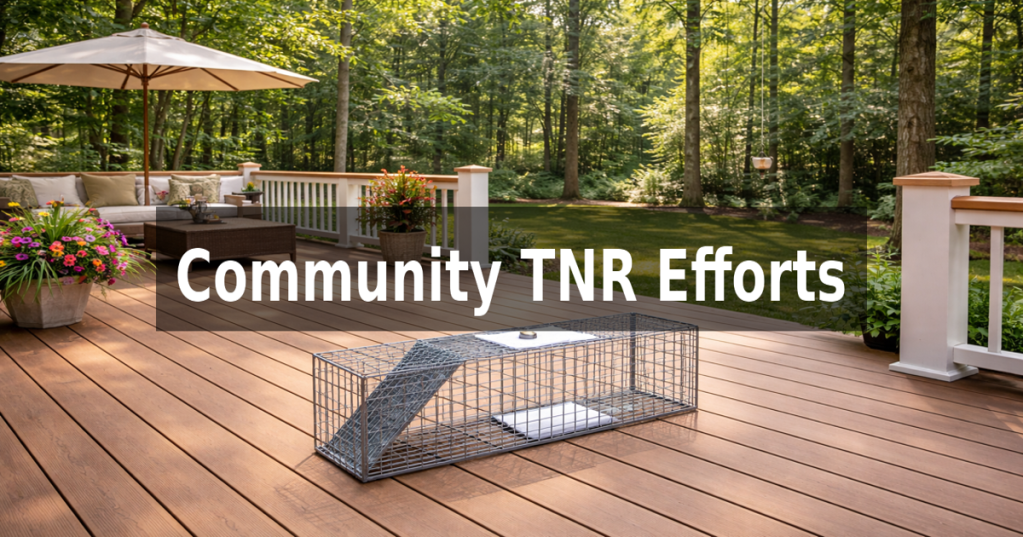
    There’s something unexpected living under my deck for years and it’s changed how I think about an issue our community quietly faces.

    A small group of community cats has made a home there. At first, I had the same reaction many people do with concern and uncertainty about what to do. But I quickly learned there’s a better way to handle it.

    These are community cats, not typical pets. Trying to remove them doesn’t solve the problem because new cats will simply move in. What does work is Trap Neuter Return, or TNR.

    TNR humanely traps cats, has them spayed or neutered and vaccinated, and returns them to where they live. It prevents new litters, reduces issues, and stabilizes the population over time.

    That’s where organizations like Spay and Stay (link) make a real difference. They provide the resources and guidance to handle situations like this the right way.

    Working with them turned a frustrating situation into a manageable one. The cats are cared for, no new litters will be born, and the issue is under control.

    If you have feral cats in your area and are looking for a good, humane solution, give Spay and Stay (link) a call.

    Sometimes the best solutions start right in our own backyard.

  • Building Up Illinois Developments “BUILD” Eliminates Local Control

    Building Up Illinois Developments “BUILD” Eliminates Local Control

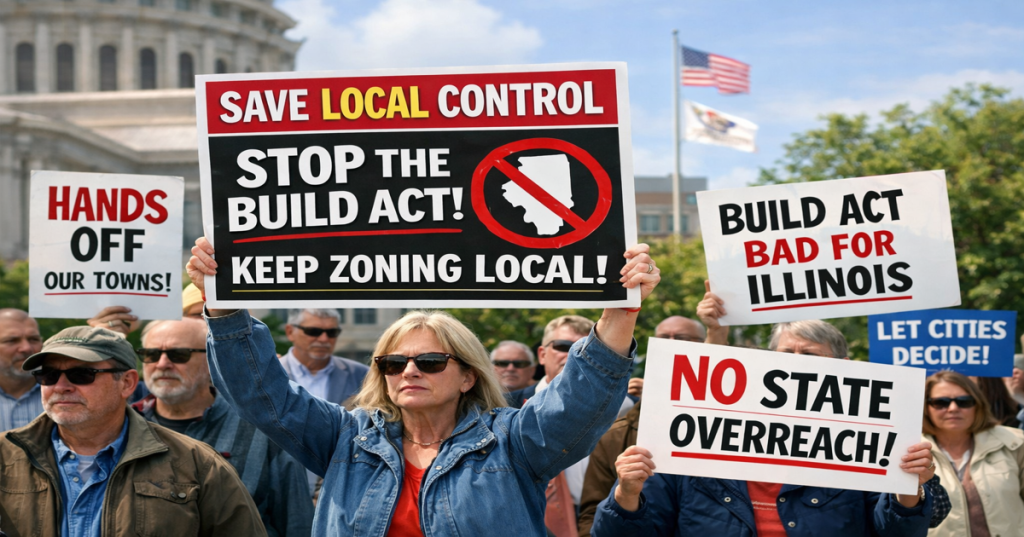
    The BUILD Proposal in Illinois: What It Means for Local Control

    As Mayor, one of my core responsibilities is protecting the ability of our community to make decisions that reflect our local values, priorities, and needs. That’s why proposals like the BUILD initiative in Illinois deserve a closer look, because at their core, they raise an important question:

    Who should decide what happens in our neighborhoods?

    The BUILD proposal (often discussed in the context of statewide housing and development reform) is designed to streamline development approvals, particularly for housing, by reducing what some see as barriers created at the local level.

    On the surface, that may sound reasonable. Illinois, like many states, is facing housing challenges. But the way BUILD attempts to solve that problem is where concern begins.

    Under proposals like BUILD, authority that has traditionally been held by local governments, like zoning decisions, development approvals, and land use planning, could be significantly reduced or overridden by state level standards.

    That means:

    • Developments could proceed without local review.
    • Community input could be limited or bypassed
    • Locally adopted plans and ordinances could carry less weight

    For communities like ours, that’s not a small change, it’s a fundamental shift in how decisions are made.

    Local government isn’t just another layer of bureaucracy, it’s the level of government closest to the people.

    We understand:

    • The character of our neighborhoods
    • The capacity of our infrastructure
    • The needs of our residents
    • The long term vision of our community

    When decisions are made locally, they reflect real, lived experience, not one size fits all policies.

    If BUILD or similar legislation moves forward in its current form, communities could see:

    • Increased density without corresponding infrastructure
      Roads, schools, and emergency services may not keep pace with rapid development
    • Loss of community character
      Developments that don’t align with existing neighborhoods could be approved with limited input
    • Reduced transparency
      Residents may have fewer opportunities to engage in decisions that directly affect them
    • Strain on local resources
      Without local oversight, planning for growth becomes reactive instead of strategic

    To be clear, this isn’t about being anti development. Growth is important. Housing is important. But how we grow matters just as much as how much we grow.

    There is a path forward that:

    • Encourages responsible development
    • Addresses housing needs
    • And preserves local decision making

    State and local governments should be partners, not adversaries, in solving these challenges.

    As this conversation continues in Springfield, it is important that your voice is heard.

    If you share concerns about the potential loss of local control, I encourage you to contact your State Representative and State Senator and respectfully voice your opposition to this proposal. Elected officials need to hear directly from the residents they represent.

    Civic engagement is one of the most powerful tools we have, and your input can help shape the outcome of this legislation.

    I will continue advocating for a balanced approach, one that respects the role of local governments while working toward broader statewide goals.

    Because at the end of the day, the people who live in our communities should have a voice in shaping them.

    That’s not just good policy, it’s good government.

  • Mayor Musings

    Mayor Musings

    On April 9, 1970 Taco Bell decided to spice things up and turned the fast food industry on its head, leaving a legacy that no one has managed to top since.

    The Enchirito burst onto the scene, causing a nationwide frenzy that had people lining up like it was the last concert of the Rolling Stones.

    But alas, in 1993, it was retired, leaving a void in our hearts and a permanent dent in our tastebuds that no amount of cheese, beef and black olives will ever fill.

    It returned for a brief tasty minute in 2000 and 2023 removing black olives as a standard option.

    Quite possibly the greatest Mexican dish ever created.

    1970 Enchirito on all its glory.
  • Round Lake’s Heritage: Stories from 1908 to 2008 – Part 5 of 5

    Round Lake’s Heritage: Stories from 1908 to 2008 – Part 5 of 5

    The final reel!

    Part 5, the final part is heavy on the police and fire departments. It ends with a lot of pictures collected from residents and agencies from all corners of the Village and County.

    I hope you enjoyed this old relic and learned a little bit about where our little Village came from and how we got to 2008.

    Maybe we can put together a committee to update and create a video and history from 2008 to 2028. Let me know if you are interested!

    Here is that video:

  • Round Lake’s Heritage: Stories from 1908 to 2008 – Part 4 of 5

    Round Lake’s Heritage: Stories from 1908 to 2008 – Part 4 of 5

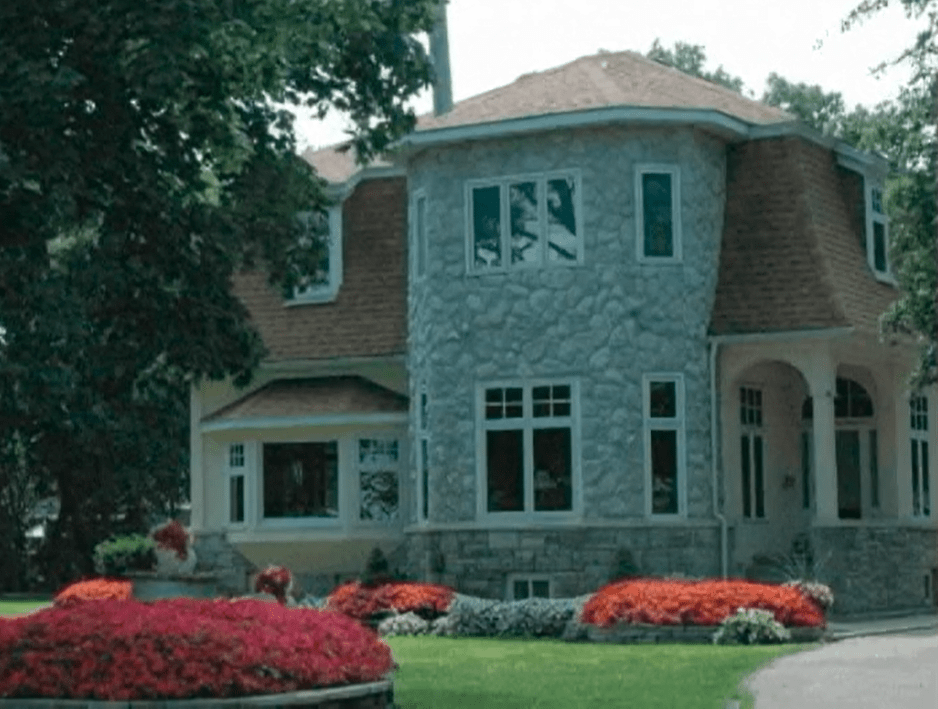
    The picture above is one of my favorite homes in Round Lake. It’s just off our downtown district and is still owned by the same family. It is home to former Mayor Dietz.

    Take a cruise around the older part of town and you will be sure to see it.

    Part 4 video speaks to our old Village Hall and Police Station with interviews from former Chiefs and Mayors.

    Here is that video:

    Check back for the final part 5!

  • Round Lake’s Heritage: Stories from 1908 to 2008 – Part 3 of 5

    Round Lake’s Heritage: Stories from 1908 to 2008 – Part 3 of 5

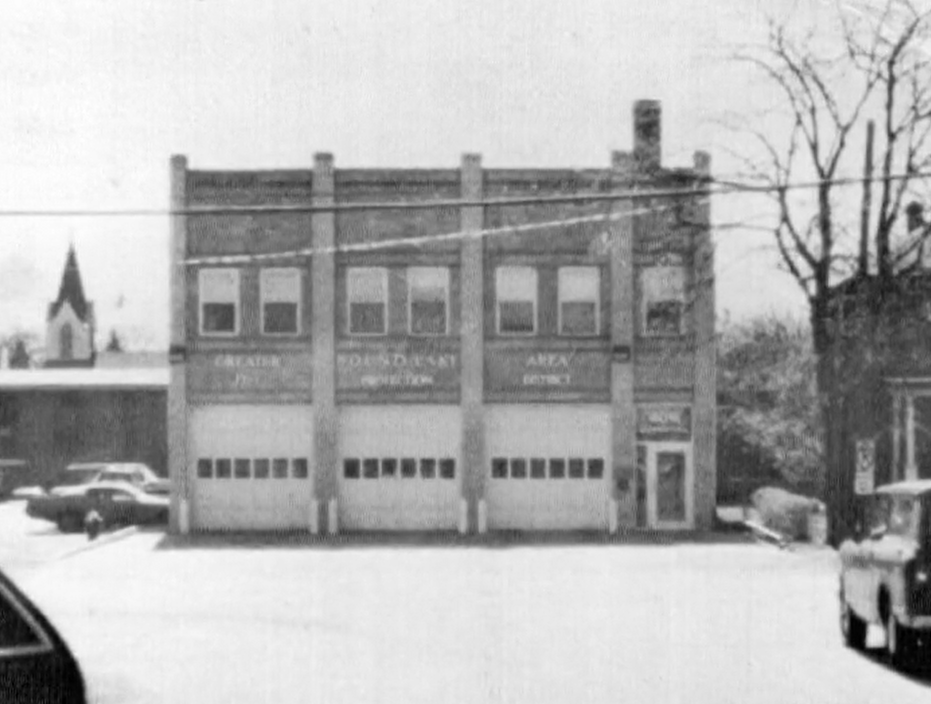
    The picture above is the original Greater Round Lake Area Fire Protection District. The building is still standing to this day with a few renovations and additions. It is called House 1 now.

    Part 3 video has a lot to do with the fire department, churches, first state bank of Round Lake and Dr. Goshgarian.

    Here is that video:

    Check back soon for part 4!

  • Round Lake’s Heritage: Stories from 1908 to 2008 – Part 2 of 5

    Round Lake’s Heritage: Stories from 1908 to 2008 – Part 2 of 5

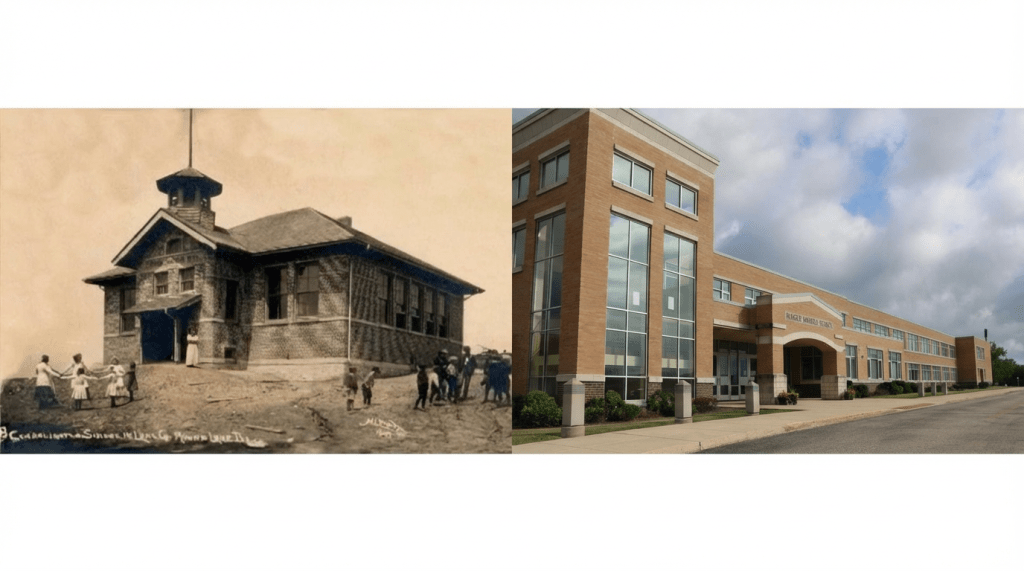
    The picture above is the school building that is now John T. Magee Middle School on Cedar Lake Road and Hart Road.

    In 2008, construction regulations required a portion of the original structure to remain in place. This was necessary for the project to qualify as a renovation or expansion rather than new construction. For that reason, a significant part of the south side of the building was preserved. Today, that section still reflects the original two room schoolhouse structure. It serves as the foundation, or “bones,” of the current building.

    That history stretches back much further than many realize. John T. Magee Middle School traces its origins to 1922. The original school building was constructed to serve a much smaller, rural Round Lake community.

    Over the decades, as Round Lake grew, the school evolved alongside it. The building saw multiple additions and renovations in 1960, 1974, 1982, and again in 2008, each reflecting new generations of students and changing educational needs. Rather than replacing the structure entirely, those updates layered new spaces onto the original foundation, preserving a physical connection to the community’s earliest days of public education.

    Today, Magee serves students in grades 6 through 8 as part of Round Lake Area Schools District 116, a district formed in 1968 through the consolidation of earlier local school systems. The school now educates roughly 600–700 students each year and reflects the diversity and growth of the broader Round Lake area.

    What makes Magee especially unique is that it is not just a school building—it is a living timeline. From its beginnings as a small early 20th century schoolhouse to its modern role serving a vibrant and growing community, the structure itself tells the story. And because of that 2008 decision to preserve part of the original building, that story is still visible today in the very walls students walk past each day.

    Here is that video:

    Check back soon for part 3!

  • Round Lake’s Heritage: Stories from 1908 to 2008 – Part 1

    Round Lake’s Heritage: Stories from 1908 to 2008 – Part 1

    Part 1 of 5: 1908 to 2008

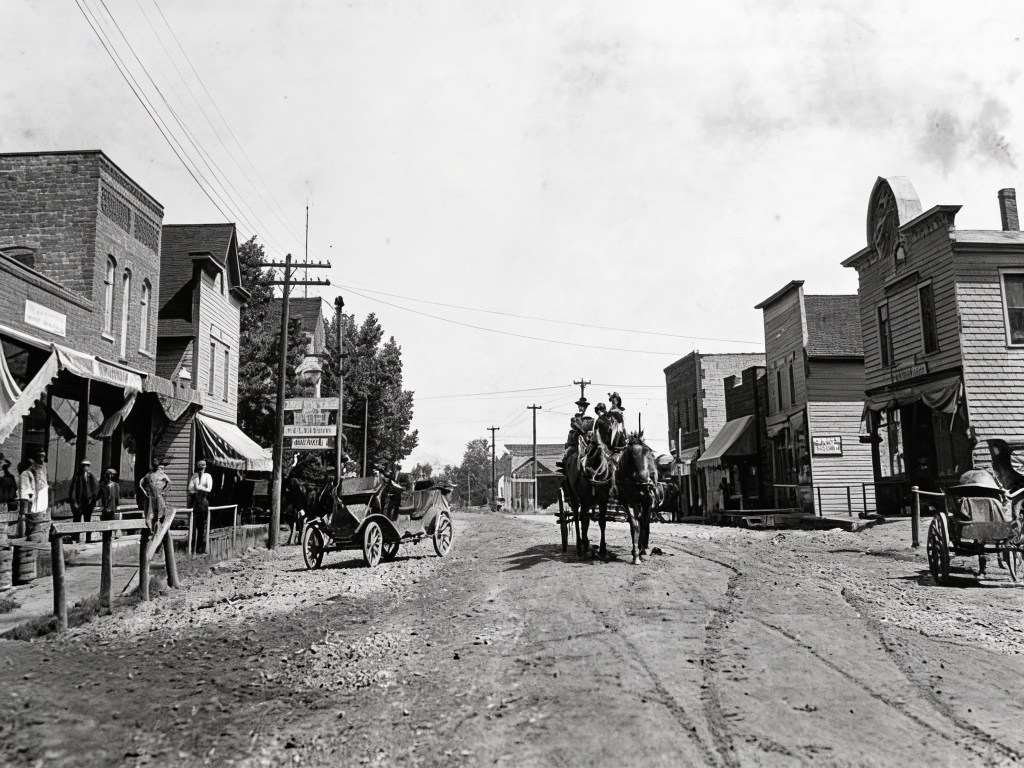
    The picture above has been run through AI to improve the quality. While improving the quality, it has lost some of its original detail. But what it still captures is something incredibly special, downtown Round Lake, circa 1908.

    Take a moment to think about that. Over a century ago, the heart of our community was already taking shape. What is even more remarkable is that some of the buildings in that photo are still standing today. They have weathered generations of change, growth, and progress, quietly holding onto the stories of where we began.

    Back in the early 2000s, I had the privilege of serving as a Village Trustee. During that time, I was honored to be part of the Village Board during Round Lake’s Centennial Celebration. It was a meaningful moment for our community. It gave us a chance not just to celebrate. It also allowed us to reflect.

    Mayor Gentes, along with several dedicated community members, commissioned a company to dig deep into our history. They interviewed longtime residents. I respectfully refer to these residents as the “old timers.” They also interviewed elected and appointed officials who helped shape the Village over the years. After months of work, they produced a video documenting Round Lake’s story from 1908 to 2008.

    At the time, we called them CDs.

    Looking back now, it is a snapshot not just of our history, but of how we preserved it.

    Here is that video:

    I have always enjoyed learning about the history of our Village. I have called Round Lake home for the past 30 years. Despite this, I still find myself drawn to the stories of those who were here long before me. There is something powerful about understanding where we came from. It gives context to where we are today and direction for where we are headed.

    The Mayor should know this history. It is important not just for appreciation but to help carry it forward. These stories belong to all of us, and it is our responsibility to pass them along to the next generation.

    This is just the beginning.

    In Part 2, we will examine how Round Lake evolved through key periods of growth. We will explore the decisions that helped shape our community into what it is today.

  • Making a Difference: Volunteering

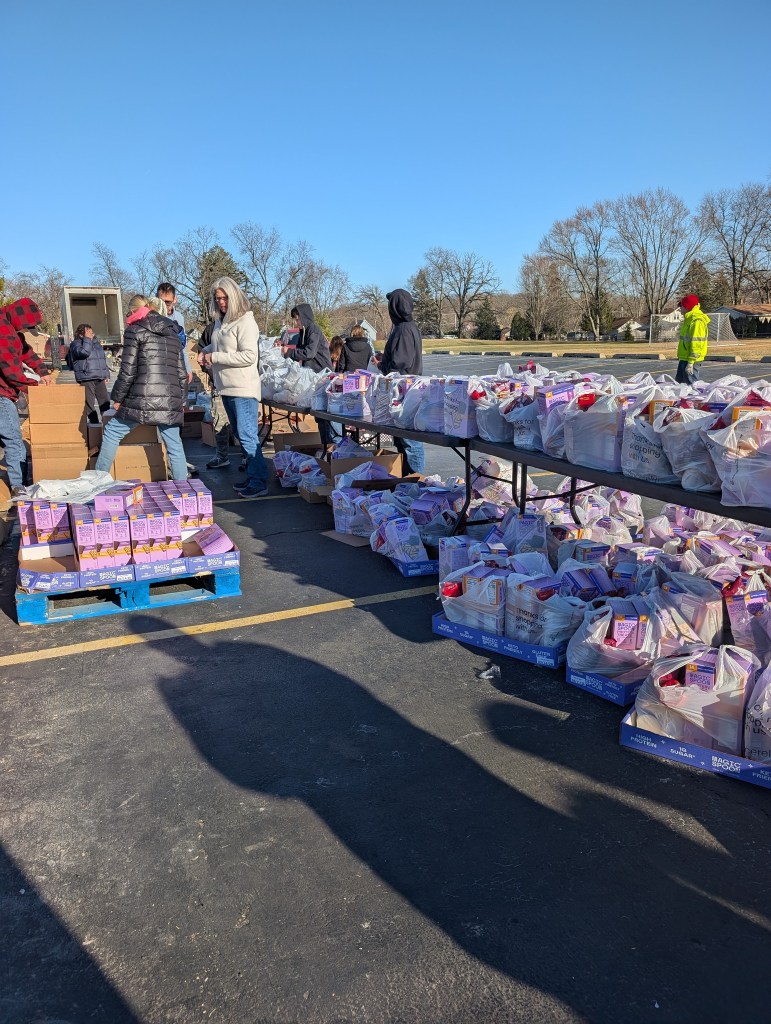
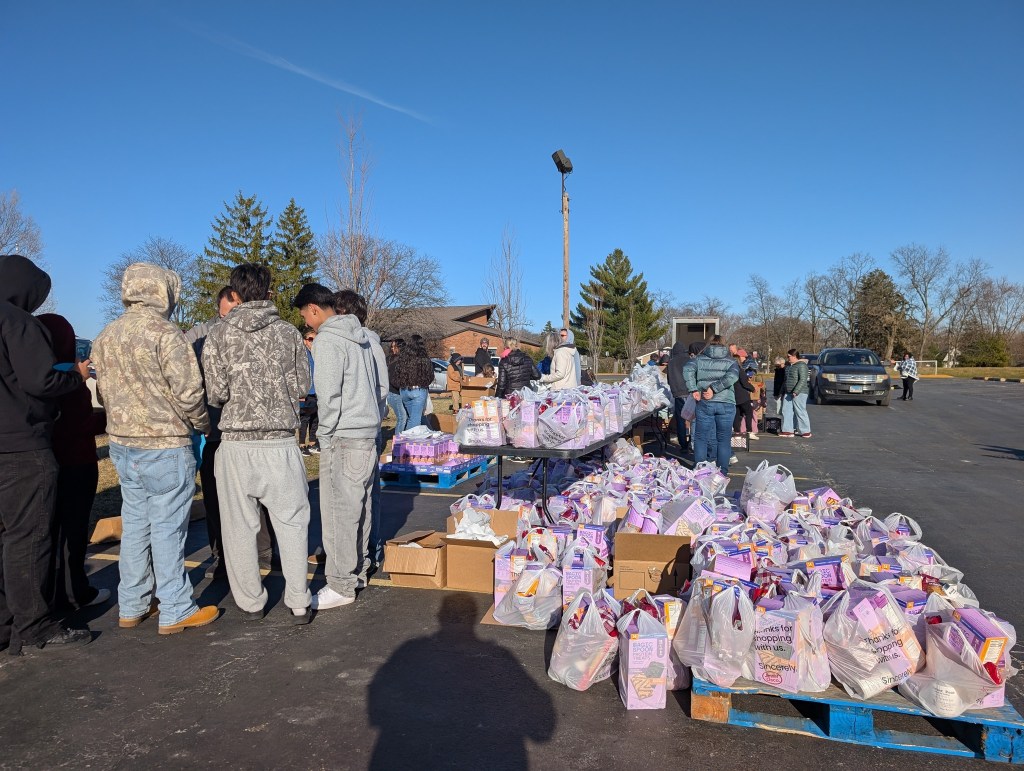
    This past Monday, I had the privilege of volunteering for the Northern Illinois Food Bank during a food distribution event held at St. Joseph Church in Round Lake. In just two hours, we handed out over 250 meals to families in need, a powerful reminder of the impact a dedicated community can have.It was especially heartwarming to see several young volunteers. These kids are demonstrating the qualities of future leaders through their energy, commitment, and willingness to serve.

    What struck me most was the sense of teamwork and shared purpose. People from all walks of life came together to contribute their time, energy, and care. It is a reminder that making a difference does not require a large commitment, just a willingness to show up and help.

    If you are interested in volunteering or donating, you can learn more at the Northern Illinois Food Bank website or reach out and I can forward some information.

    Thank you to everyone from event for welcoming me and showing what it truly means to serve. I am looking forward to getting involved again soon.

    #RoundLakeForward #CommunityStrong #Volunteer